VSS 2025: International Workshop on Verification of Scientific
Software
May 4, 2025 Hamilton ON, Canada
News
- Dinner! Maccheroni Cucina
Alfresco, 6:15 PM. It is a 20 minute walk from workshop venue.
For those who want to walk together, we will meet in the main lobby
and depart at 5:55 PM.
- Challenge drafts added.
About
Software plays an increasingly important role in scientific and
engineering disciplines. Climate modeling, weather prediction, drug
discovery, the design of buildings, vehicles, and aircraft,
simulations of astrophysical phenomena, and prediction of seismic
activity are some of the many applications. Verification of such
software presents numerous challenges, e.g.: the programs are large,
complex, and utilize multiple CPU and GPU concurrency interfaces;
precise reasoning about real or floating-point operations is often
required; there is often no oracle; and correctness may require
reasoning about deep mathematical concepts such as convergence and
stability. This workshop will focus on verification techniques that
address these challenges, including approaches based on deductive
reasoning, model checking, symbolic execution, abstract
interpretation, and static analysis.
The workshop will take place as part of ETAPS 2025, on Sunday, May 4, 2025, at
McMaster University in Hamilton, Canada. We aim to bring together
researchers from both the scientific computing and the software
verification communities. Through invited talks and presentations of
peer-reviewed papers, participants will learn about the correctness
challenges developers face, as well as a variety of verification
approaches for tackling those challenges.
We are interested in all aspects of the verification problem
for scientific software, including, but not limited to:
- ways to specify scientific software
- reasoning about mathematical concepts realized in software,
including linear algebra, differential equations, convergence,
stability, and order of accuracy
- effective verification techniques for programs that use MPI,
OpenMP, CUDA, or other CPU or GPU concurrency interfaces used
in scientific computing
- precise reasoning about floating-point computations
- techniques to reason about discretization in time and space,
such as discrete grids and adaptive mesh refinement
- case studies applying verification tools to scientific
software
- methods to decompose verification problems for scientific
programs, such as function contracts.
Keynote Speakers
Andrew
Appel, Princeton University, US
- Title: Foundational end-to-end verification of
numerical programs
- Abstract:
Program verification is foundational when it assumes only the
axioms of logic, the specification of the machine to be run on,
and the specification of desired input/output behavior. It is
end-to-end when the machine model is low-level, the desired
specification is high-level, and all the component verifications
compose together into a single machine-checked theorem.
Foundational E2E verification has been demonstrated in a few
application domains (cryptography, operating systems, compilers).
Now it's time to apply it to scientific computing. This requires
several different kinds of proofs: correctness of a low-level
program w.r.t. a floating-point functional model, data structure
proofs, floating-point round-off error analysis, method-error
bounds, convergence proofs. Each kind of proof needs its own
tools and libraries, and its own experts. Fortunately, the proof
assistants for a logical framework provides a structure in which
all these tools and libraries can connect, and these experts can
collaborate.
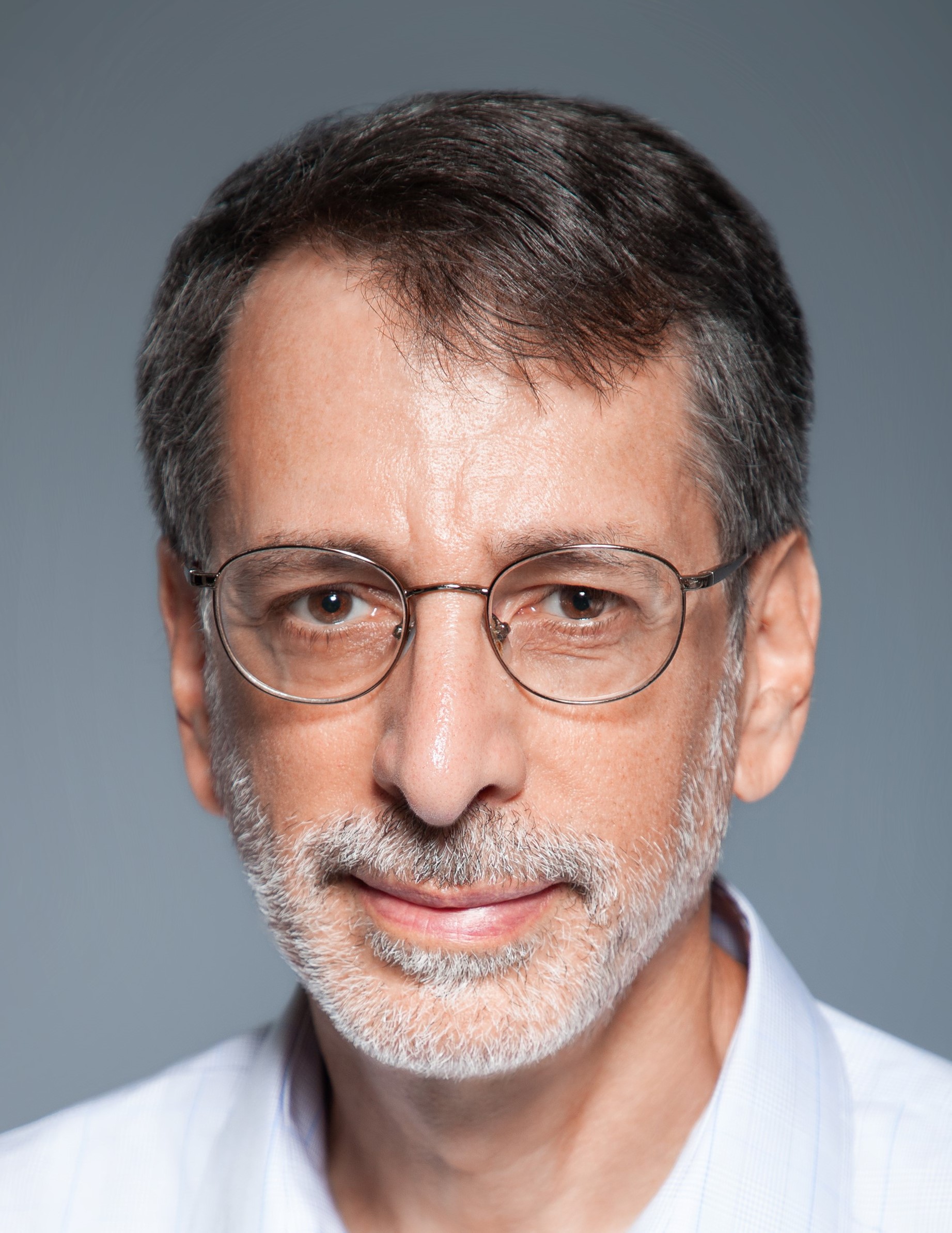
- Bio:
Andrew W. Appel is the Eugene Higgins Professor of Computer
Science at Princeton University. His first work in scientific
computing (undergraduate thesis 1981, journal publication 1985)
was the invention of the "tree code," an efficient
divide-and-conquer algorithm for N-body problems widely used in
astrophysical simulations. Since 1983 he has worked in
programming-language semantics, functional programming, compilers,
machine-checked program verification, and technology policy. He
has verified programs in the application domains of compilers,
operating systems, cryptography, networks, and (since 2020)
formally verified numerical methods.
- Title: Automated Program Analysis for Scientific
Software
- Abstract:
Program Analysis has successfully solved a variety of problems
across multiple areas including software engineering, compilers,
security, and most recently machine learning. Despite these
successes, the application of program analysis to scientific
computing remains understudied. Further, the few existing techniques
that analyze scientific software focus mainly on lower-level
concerns such as floating-point stability. While those issues remain
important, scientific programs must also obey higher-level
mathematical properties for which there do not exist any automated
program analyses. Despite this need, a gap exists between the
scientific computing community and the programming languages and
formal methods community.
As a step towards bridging this gap, this talk describes why
automated program analysis, in particular abstract interpretation,
offers a natural way to reason about the programs encountered in
scientific computing. I will also discuss how one can cleanly
formalize new domain-specific properties from scientific computing
in the language of abstract interpretation and focus on applications
found in Automatic Differentiation and Bayesian inference. Beyond
abstract interpretation, this talk will highlight why the entire
program analysis, testing, and formal methods toolkit offers new
opportunities to ensure safe and correct scientific software.
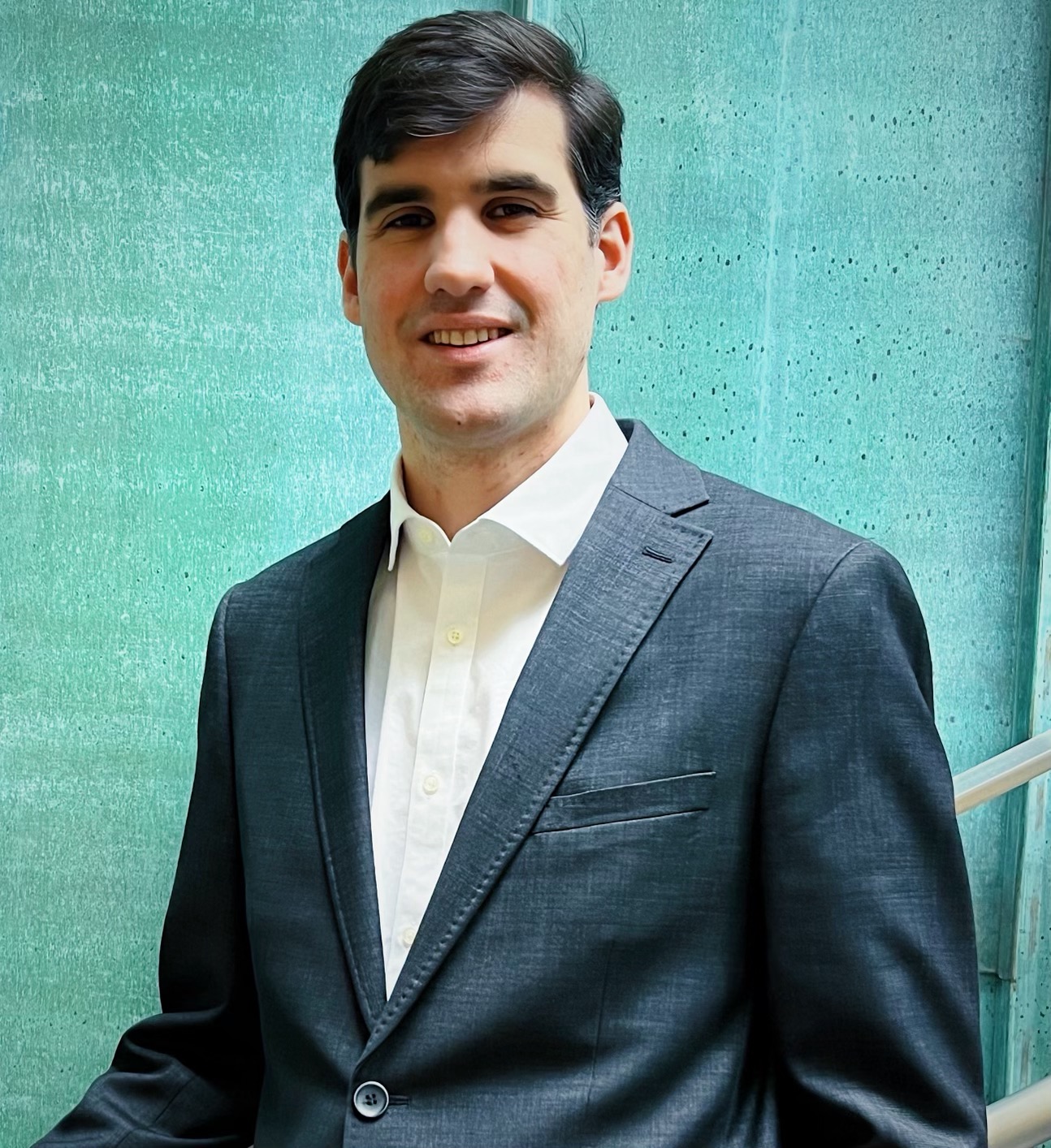
- Bio:
Jacob Laurel is an Assistant Professor in the School of Computer
Science at Georgia Tech. Jacob completed his PhD in Computer Science
at the University of Illinois Urbana-Champaign in Fall 2024. Jacob’s
research interests center upon applying insights from continuous
mathematics to build program analyses for differentiable and
probabilistic programming languages. His current research focuses on
building precise, general and scalable static analyses for Automatic
Differentiation and other scientific computing applications. He
earned bachelors degrees in both Electrical Engineering and Applied
Mathematics (Scientific Computation Track) at the University of
Alabama at Birmingham.
Organization
Workshop Organizers:
To send a message to the organizers, email vss2025@googlegroups.com.
Program Committee:
- Alastair
Donaldson, Imperial College London, UK
- Cindy
Rubio-González, University of California Davis, US
- Dorra Ben Khalifa,
ENAC, FR
- Erika
Ábrahám, RWTH Aachen University, DE
- Ignacio Laguna,
Lawrence Livermore National Laboratory, US
- Jean-Baptiste
Jeannin, University of Michigan, US
- Kristin
Rozier, Iowa State University, US
- Marieke
Huisman, University of Twente, NL
- Paul Hovland,
Argonne National Laboratory, US
- Samuel Pollard,
Sandia National Laboratories, US
- Sylvie
Boldo, INRIA, FR
Call for papers
We are interested in submissions dealing with all aspects of the
verification problem as it applies to scientific software.
We plan to publish the accepted papers on this web site shortly
before the workshop. After the workshop, authors will be given a
month to revise their manuscripts and the final versions will be
published in a volume of the Electronic Proceedings in Theoretical
Computer Science.
All submissions must be unpublished and not be under review
elsewhere. Experience reports, novel expositions of previous work,
position papers, and reports on preliminary work are all welcome.
Manuscripts should be prepared using the EPTCS LaTeX style. There are two
kinds of papers: short (4–6 pages, excluding references) and
regular (7–11 pages, excluding references). Each submission
will be reviewed by at least 3 members of the Program Committee. At
least one author of each paper is expected to register for and attend
the workshop in person to present the paper.
Submission instructions: Email your paper as a
single PDF file to: vss2025@googlegroups.com,
on or before February 1, 2025 (any time on earth). Use the subject
line “VSS 2025 Submission”. Papers must
be prepared using the EPTCS latex style (see above) and must include
an abstract and the names and email addresses of all authors. The
organizers will reply to the email to confirm receipt of the paper.
Important Dates:
| Submission deadline |
Feb. 1, 2025 |
| Notification |
Mar. 1, 2025 |
Titles/abstracts of accepted papers
published on workshop web site |
Mar. 15, 2025 |
| Papers published on workshop web site |
May 1, 2025 |
| Workshop |
May 4, 2025 |
| Final versions of papers due |
June 4, 2025 |
Travel Scholarships for U.S. Students
Thanks to a grant from the U.S. National Science Foundation,
scholarships are available for select students at U.S. universities to
travel to and participate in VSS 2025. If you are interested in this
opportunity, send an email to vss2025@googlegroups.com
with subject line “VSS 2025 Student Scholarship” by
February 2, 2025 (any time on earth), with the following information:
Your name:
Your university:
Your student status (degree sought, major, year):
Are you a (co-)author on a paper submitted to VSS 2025?
If you answered "yes" above, enter the title of your paper:
If your paper is accepted and you attend VSS 2025, will you be presenting the paper?
Describe your background and interest in this area in one paragraph:
Program
| Time |
Event |
| 09:00–09:10 |
Welcome |
| 09:10–10:00 |
Andrew Appel, Foundational end-to-end verification of
numerical programs (Keynote talk)
[abstract]
|
| 10:00–10:30 |
Coffee |
| 10:30–12:00 |
Matthew Sottile, Mohit Tekriwal, and John Sarracino,
Towards Richer
Challenge Problems for Scientific Computing Correctness
[abstract]
[paper]
Alex Wilton, Verifying a Sparse Matrix Algorithm Using Symbolic
Execution [abstract]
[paper]
Max Fan, Ariel E. Kellison, and Samuel D. Pollard, Mechanizing
Olver’s Error Arithmetic
[abstract]
[paper]
|
| 12:00–12:30 |
Deepak Cherian, Property Testing for Ocean Models. Can
We Specify It? (Invited talk)
[abstract]
[paper]
|
| 12:30–14:00 |
Lunch (provided and covered by workshop registration fee) |
| 14:00–14:45 |
Jacob Laurel, Automated Program Analysis for
Scientific Software (Keynote talk)
[abstract]
|
| 14:45–15:45 |
Sehyeok Park and Santosh Nagarakatte, Fast Trigonometric Functions
using the RLIBM Approach
[abstract]
[paper]
Alper Altuntas, Allison H. Baker, Ganesh Gopalakrishnan, John Baugh,
and Stephen Siegel, Specification and Verification for Climate
Modeling: Formalization Leading to Impactful Tooling
[abstract]
[paper]
|
| 15:45–16:00 |
Stephen Siegel, Introduction to Challenge Problems |
| 16:00–16:30 |
Coffee |
| 16:30–17:00 |
Challenge problem presentations and discussion |
| 18:00–??:?? |
Group dinner at location to be determined
(not covered by registration fee) |
Challenge Problems
Last modified: Sun May 4 15:40:32 EDT 2025